Tuesday, 26 November 2019

November 26 - Howard Carter and King Tut

This Day in History: 26 November 2019


26 November 1922


97 years ago, today, English archaeologist Howard Carter opened Egyptian Pharaoh Tutankhamun's virtually intact tomb in Egypt. Carter first went to Egypt as a young artist to sketch artefacts, but later went on to become the lead excavator of the tomb of King Tutankhamun. After being told he had one more season of funding to find the tomb, a boy who worked as a water fetcher nearby started to dig alongside Carter, and helped the crew find a flight of stairs that led down to a sealed door and a secret chamber. Later, on this day, Carter and his excavation boss, Lord Carnarvon entered the tomb, and found a large amount of gold and treasures. In the following February, the coffin of King Tut was found, containing his mask and mummy. This caused an interest to spark in ancient Egypt around the world, and the discovery is considered to be one of the most significant archaeological discoveries in our modern era.


Tutankhamun, known to many as King Tut, was the 12th pharaoh of the 18th Egyptian dynasty, and was in power from about 1332 to 1323 B.C.E. In his reign, he accomplished little, and died at the age of 19, from a possible gangrene infection as a result of a broken leg. He was just nine years old when he took power, and his first years of reign may have been controlled by an elder known as Ay. The same year that King Tut took power, he married his half-sister and had two, supposedly stillborn, daughters. He was buried in the Valley of the Kings in a tomb, and seventy days afterwards, his body was laid to rest and the tomb was sealed, and later found much later by Howard Carter, in 1922.


As well as it being the 97th anniversary of this discovery, there is also an exhibition including KingTut's 150 original artefacts, 60 of which have never left Egypt before, going on in London's Saatchi Gallery until May 3 2020, as well as a virtual reality ride that takes you into the tomb as Carter first discovered it. It promises to be the largest Tutankhamun exhibition outside of Egypt and will be the last time the treasures will leave the country!


Want to find out more on this discovery? Visit https://www.nationalgeographic.com/history/magazine/2018/03-04/findingkingtutstomb/ for more details, and https://tutankhamun-london.com for more details on the exhibition. 

Monday, 25 November 2019

November 25 - Alfred Nobel and Dynamite

This Day in History: 25 November 2019

25 November 1867

152 years ago, today, Swedish chemist Alfred Nobel first patented dynamite, the fifth of Nobel's 355 patents and his most famous. Nobel began as a student of chemistry and progressively became interested in searching for an alternative to nitro-glycerine, a highly unstable explosive, while working in his father's explosive factory. He worked hard to improve this and made dynamite from mixing this unstable explosive with kieselguhr, a rock that can be crumbled into a find powder. He found this could be shaped into a paste and could be kneaded and shaped for all kinds of insertion. This was called 'dynamite'.

Nobel then started to invent other explosives, such as gelignite in 1875, which was more stable than dynamite. In 1895, in his will after his death, Nobel established the 'prizes to those who, during the preceding year, have conferred the greatest benefit to humankind', the Nobel Prize, with his remaining fortune. The first of these prizes were awarded in 1901, where the Peace Prize was shared between Frédéric Passy, for his role in founding the first French peace society, and Jean Henry Dunant, for his role in founding the International Red Cross Movement and initiating the Geneva Convention.

Want to find out more about Nobel's invention of dynamite? Visit https://www.thoughtco.com/history-of-dynamite-1991564 for more details and more information on Nobel's life.


Saturday, 23 November 2019

Charles Darwin


Charles Darwin 1880.jpg

This Day in History: 24 November 2019
   
160 years ago, English naturalist Charles Darwin published ‘On the Origin of Species’ which contained gripping evidence for his revolutionary theory of evolution and laid the foundation for evolutionary biology. It included detailed observations, inferences and considerations of future objections that outlined the scientific theory that species evolve over the course of generations through natural selection. Darwin included evidence that he had gathered on the Beagle expedition, sailing across the Atlantic Ocean and southern South America in the 1830s, and his other findings from research and experiments.
 
There began growing support for these ideas among the public and other anatomists, but during the first half of the 19th century, the Church of England had a large control over English science, and so they disproved of a theory that would conflict with the religious and traditional idea of humans being unique and unrelated to other animals. 
 
Later on, in history, throughout the late 19th century and the early 20th, various other evolution mechanisms were given more credit, as well as the modern evolutionary synthesis being developed in the 1930s and 1940s. This meant that Darwin's concept of evolution through natural selection became central to the modern evolutionary theory and now has become one of the most popular concepts on how life on our planet began. 
 
Want to find out more? Visit https://www.britannica.com/biography/Charles-Darwin/On-the-Origin-of-Species for more details on what ‘On the Origin of Species’ covered.

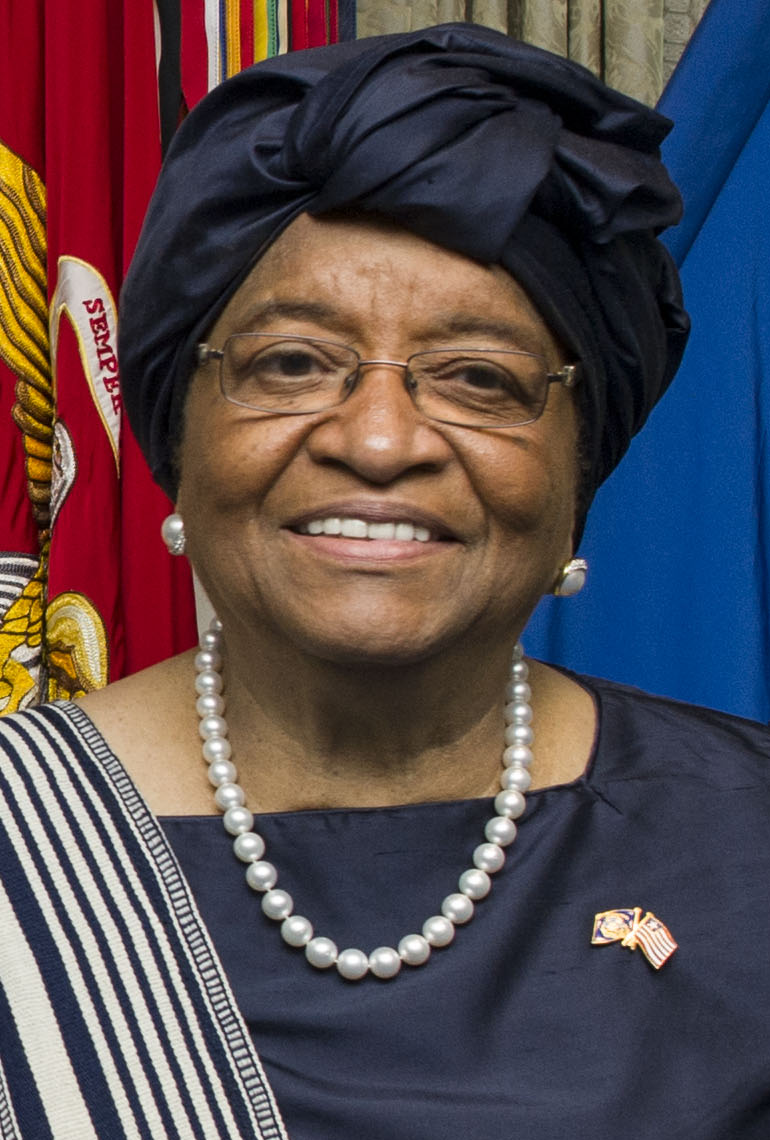
Ellen Johnson-Sirleaf


Ellen Johnson Sirleaf February 2015.jpg
This Day in History: 23 November 2019
  
14 years ago, today, marks the moment that Ellen Johnson-Sirleaf was elected as the president of Liberia, making her the first woman ever to lead an African country. She first ran for presidency in 1997, but finished second to Charles Taylor, and was forced into exile for the second time when his government charged her with treason. Sirleaf then returned to Liberia again in 2003 after the civil war had resumed 6 years earlier, and Taylor was now in exile himself. 
 
In 2005, she ran for presidency again, as a candidate of the Unity Party and promised to end civil strife, corruption, establish unity and rebuild the country’s ruins. She became known as the “Iron Lady”, and came second in the first round of voting, behind George Weah, a former footballer. In the following election, she beat Weah with 19% more votes than him. On 23 November 2005, Sirleaf was declared the winner and confirmed as the country’s next president.
 
As president, she gained millions of dollars from foreign investment and established a Truth and Reconciliation Committee to deal with corruption and treat ethnic tensions, therefore achieving what she promised in her 2005 election. 
 
In 2011, Sirleaf won the Nobel Peace Prize for the year for her non-violent struggle for the safety of women and women’s rights, to full participation in peace-building work.
 
Want to find out more? Visit https://www.nobelprize.org/prizes/peace/2011/johnson_sirleaf/biographical/ for more details on Sirleaf’s life and work.

JFK


On this Day: 22 November 1963


56 years ago, today, American President, John F. Kennedy, was assassinated while driving in Dallas among a motorcade, during a campaign visit. The motorcade was turning past the Texas School Book Depository at Dealey Plaza as crowds watched lined upon on the streets, and suddenly Kennedy was shot dead. The driver immediately raced to the nearby Parkland Memorial Hospital, but because the shots were in the neck and head, Kennedy was pronounced dead half an hour after the events unfolded. Kennedy would later be remembered by Americans and the rest of the world for the Bay of Pigs invasion and the Cuban Missile Crisis, two events that took place in the height of the Cold War that caused mass tension around the world.


Later in the day, Marxist Lee Harvey Oswald was arrested as a suspect for JFK’s assassination. However, only two days later would Oswald be murdered by local nightclub owner Jack Ruby at an extremely close range, on live TV.


Want to find out more? Visit https://www.history.com/topics/us-presidents/jfk-assassination for further details

Nonsuch HP Returns

Image result for we're back"
After a long hibernation, the blog is coming back to life! Stand by for some "On this Day in History" articles and many thanks to PH for agreeing to write them.

Friday, 2 March 2018

Belgium Trip Going Ahead

Good morning everyone,

based on the conditions of the roads and the weather this morning, we are planning to go ahead with the Belgium trip. We look forward to meeting the students at 7am at Nonsuch - please drive very carefully!

Many thanks for your patience and support for the trip this year.

Mr Coy

Thursday, 1 March 2018

Belgium Trip - Weather Update 3

Based on the current weather forecasts, the Belgium Trip is still planned to go ahead tomorrow. However we will start at 7AM, not 5am as originally advertised, to allow the turning circle on the school site to be cleared and for daylight travel for parents. The pathway to David Lloyd will not be cleared by this time so we advise you to park off site to deliver your daughters. We ask that parents should check this blog again on Friday morning by 5.45am to check for further updates in case of severe weather and advice from Westways, our coach company, that the trip must be cancelled.


Due to the later start please can you provide a packed lunch for your daughter or the means to buy food at Dover (ie please bring some UK pounds) where we may have to wait for a ferry. Prices on the ferry are also in pounds. This means we may not get to Ypres until later in the afternoon but we still plan to visit the In Flanders Fields Museum and walk together to the Menin Gate before travelling to the hotel. Please could students ensure they have plenty of warm clothes to hand when they get on the bus and also make sure that they present their passport and EHIC card to a member of staff before they get on.


The weather in Ypres (look for "Ieper" if using BBC weather: https://www.bbc.co.uk/weather/0/2795100)  looks much more promising on Saturday, and this will allow us to visit key sites such as Tyne Cot and the medical facilities at Essex Farm and Lijssenthoek so we can meet the aims of our trip.


We plan to return at approximately 10:30pm on Saturday as mentioned in the trip booklet but will communicate to you if this time changes.


Please could students also check their school emails where I have sent you a similar message and have asked you to reply to it acknowledging that you understand that we are now leaving at 7am.


Many thanks and I look forward to seeing you tomorrow (barring late weather changes - so keep checking the blog!)


Mr Coy

Belgium Trip Weather Update 2

You will have probably seen that Nonsuch is closed today (Thursday) due to the snow. Clearly the safety of students and staff is our greatest concern so we will check carefully to see if it is safe for the trip to go ahead tomorrow morning. Please assume for the moment that the trip is going ahead and we will leave an update with a confirmation of our final decision as soon as we can. We apologise for all the uncertainty caused by this due to difficulty predicting the severity of the weather in our area.

Tuesday, 27 February 2018

Belgium Trip - Weather Update 1


Keep checking this page for updates on the Belgium Trip. At the moment we are planning to depart as planned at 5am on Friday 2 March, but if the situation changes suddenly a notice will be placed here.
In the meantime, students going should prepare for cold weather - they should wrap up warmly with lots of layers, and bring appropriate coats and footwear.